

Choosing a Garage Floor Coating for Ohio Winters: Epoxy vs. Polyaspartic

Ohio winters can be hard on garage floors. Snow, slush, road salt, moisture, and dirt are regularly carried inside on vehicles and shoes, leaving bare concrete exposed to months of harsh conditions. Add everyday vehicle traffic, dropped tools, oil, and other automotive fluids, and your garage floor has a lot to handle.
A professional floor coating can protect the concrete while creating a cleaner, more finished garage. Homeowners commonly choose between epoxy and polyaspartic coatings.
Both can be used to create durable garage floors, but they aren't the same. Understanding the differences between an epoxy concrete floor and a polyaspartic garage floor coating can help you know what questions to ask when planning your project.
Concrete may look solid, but it is porous. When left unfinished, moisture and other contaminants can penetrate the surface.
Winter introduces additional challenges. Vehicles carry snow, ice, water, road salt, and deicing materials into the garage, where they eventually melt onto the floor. Over time, repeated exposure can contribute to staining and deterioration.
A properly installed coating system creates a protective surface over the concrete. In addition to improving appearance, this makes winter messes easier to clean and helps protect the slab underneath.
Epoxy has been used for residential, commercial, and industrial flooring for years. It is a resin-based material that bonds to properly prepared concrete and cures to create a hard, durable surface.
Epoxy is known for its strong adhesion and ability to create a substantial coating over concrete. Depending on the system, it can also provide resistance to chemicals, stains, abrasion, and everyday wear.
Another advantage is versatility. Epoxy systems can incorporate different colors and decorative finishes to create a floor that looks significantly different from unfinished concrete.
For garages, epoxy may be used as one component of a larger coating system rather than being the only product applied to the floor.
Polyaspartic is another high-performance coating option used on concrete floors.
One of its most recognizable advantages is its fast cure time. Polyaspartic products can cure considerably faster than traditional epoxy products, which can reduce the amount of time a garage needs to remain out of service.
Polyaspartic coatings are also known for abrasion resistance, chemical resistance, and UV stability. That UV resistance can be particularly helpful in garages that receive significant sunlight through open doors or windows.
Like epoxy, polyaspartic coatings are available as part of decorative systems that can completely change the appearance of a garage.
The best way to compare these materials isn't necessarily to ask which one is "better." Instead, consider how their characteristics fit the project.
Epoxy generally requires more time to cure. Polyaspartic products cure faster, which can allow homeowners to return their garage to service sooner.
If minimizing downtime is a priority, cure time may influence the system recommended for your project.
Some epoxy products can discolor with prolonged UV exposure. Polyaspartic coatings generally provide greater UV stability, making them useful as a protective topcoat in areas exposed to sunlight.
Both materials can provide durable surfaces when they are properly selected and professionally installed.
The expected traffic, abrasion, chemical exposure, and other conditions should be considered when determining which materials belong in the overall flooring system.
Both epoxy and polyaspartic systems can provide attractive finishes.
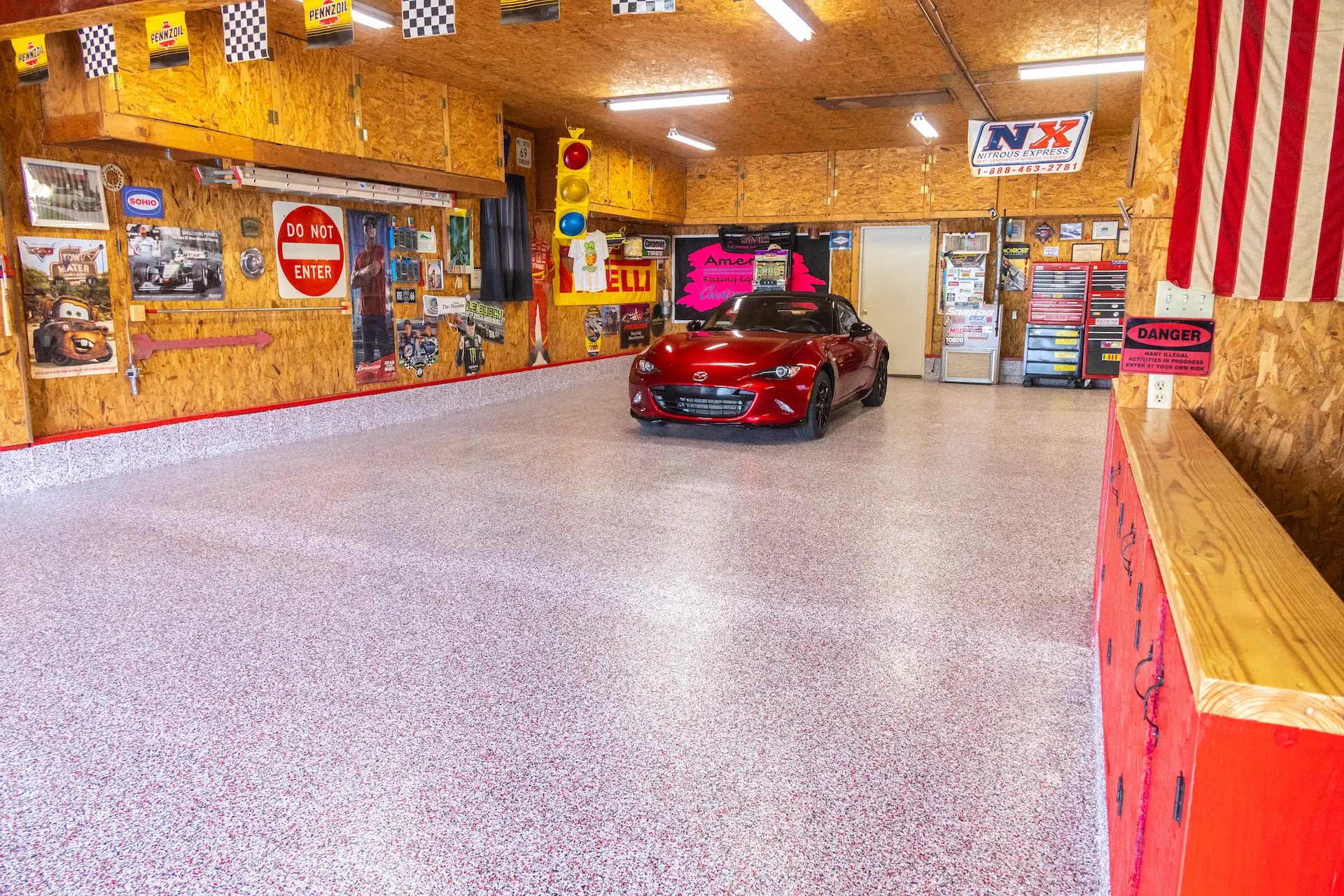
Decorative chip systems are particularly popular for garages because they add color and texture while helping disguise dirt and everyday wear. Homeowners can select from different blends to complement the garage and surrounding home.
Not necessarily.
One of the biggest misconceptions about garage floor coatings is that homeowners must choose between an "epoxy floor" and a "polyaspartic floor."
Professional flooring systems can use multiple products, with each layer serving a specific purpose. Depending on the project, a system may combine the bonding and build characteristics of one material with the performance characteristics of another.
Rather than selecting a product based solely on its name, homeowners should consider the complete system being installed.
Ask what materials will be used, how many layers are involved, how the concrete will be prepared, and why the proposed system is appropriate for your garage.
For Ohio homeowners, winter performance is an important part of choosing a garage floor.
A properly installed coating creates a sealed surface that helps prevent salt, water, automotive fluids, and other contaminants from immediately penetrating the concrete.
It also makes cleanup easier.
Instead of allowing dirty snow and road salt to soak into bare concrete, homeowners can clean the coated surface as part of routine garage maintenance.
The coating doesn't eliminate the need for cleaning, but it creates a surface that's much easier to maintain throughout winter.
Even a high-quality coating can fail if it is installed over improperly prepared concrete.
Professional preparation typically starts with evaluating the existing slab. Previous coatings, cracks, contamination, moisture concerns, and surface damage should all be identified before installation begins.
The concrete can then be mechanically prepared to create the surface profile needed for proper adhesion. Cracks and other problem areas may also need to be addressed before the coating system is applied.
Skipping these steps can contribute to peeling, bubbling, or premature failure.
When comparing garage floor coating quotes, don't focus exclusively on the coating material. Ask how the contractor plans to prepare the concrete as well.
Your garage is different from your neighbor's garage.
How much sunlight it receives, how many vehicles you park inside, how you use the space, the condition of the concrete, and how quickly you need to return it to service can all influence the right flooring system.
That's why Superior Floor Coatings doesn't take a one-size-fits-all approach.
Whether an epoxy concrete floor, polyaspartic garage floor coating, or a system incorporating multiple materials makes the most sense, the recommendation should start with your concrete and how you use the space.
A garage floor coating can provide more than a visual upgrade. The right system protects the concrete, simplifies cleaning, and creates a durable finished surface ready to handle the snow, salt, moisture, and everyday traffic that come with an Ohio winter.
If you're considering upgrading your garage floor, Superior Floor Coatings can evaluate your existing concrete and walk you through the available options.