
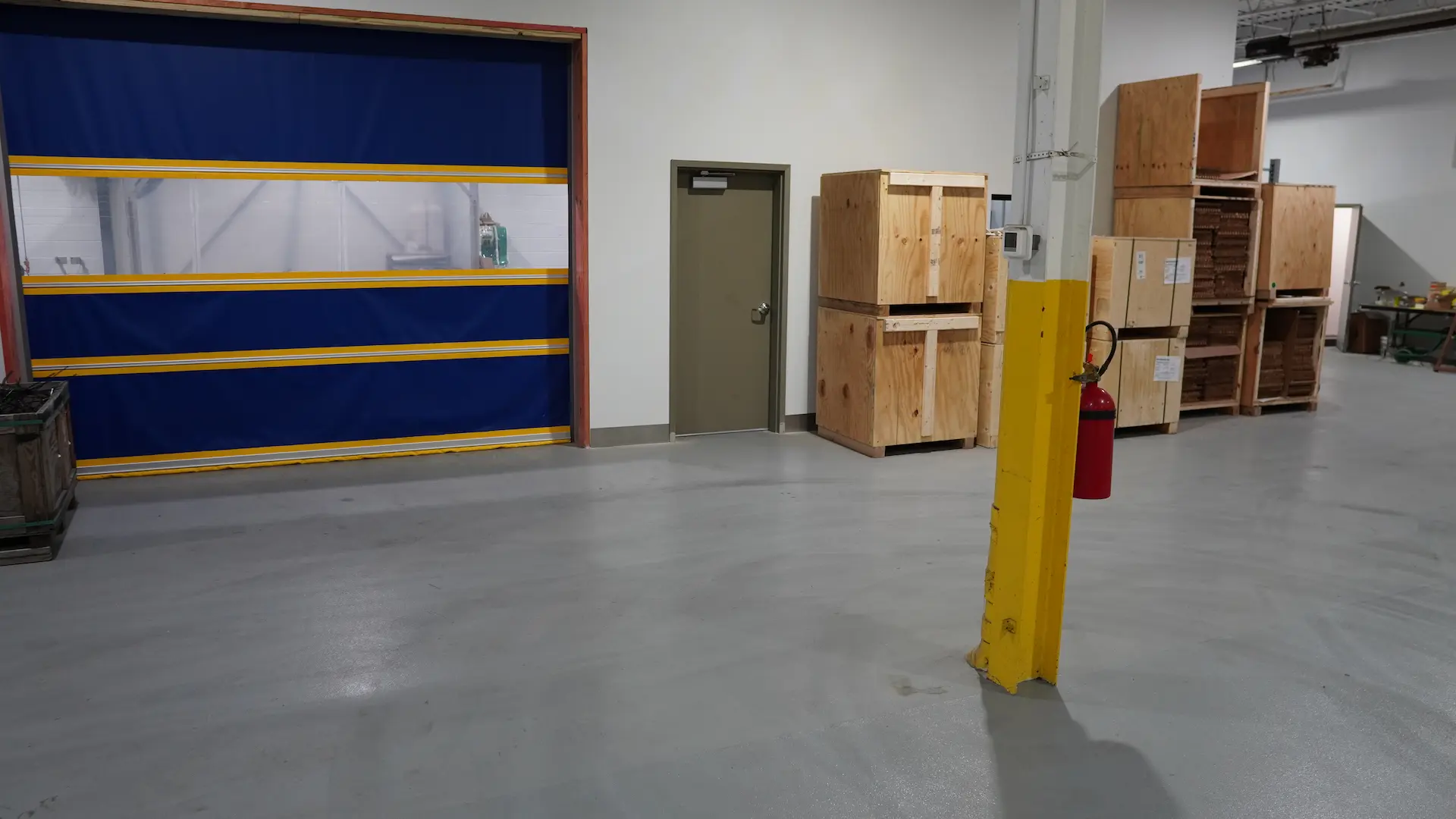
Preparing Your Warehouse for Peak Season With a New Floor Coating

Peak season looks different for every warehouse. Retail and distribution facilities may see their heaviest activity during the holiday months. Manufacturers may get busier when production schedules increase, while other warehouses experience higher traffic based on construction demand, inventory cycles, or seasonal orders.
Whatever time of year your facility is busiest, higher activity puts more stress on the warehouse floor. More shipments can mean increased forklift traffic, longer operating hours, additional employees, and heavier equipment use.
Cracked, dusty, or worn concrete can become harder to manage as that activity increases. Damaged areas may collect dirt, create uneven surfaces, or require repairs at a time when shutting down part of the facility is difficult.
Installing a professional warehouse floor coating before your busiest period gives the concrete added protection before traffic increases. It can also make the floor easier to clean and maintain when your operation is running at full capacity.
Warehouse concrete handles heavy use every working day. Forklifts repeatedly travel the same routes. Pallet jacks move loaded inventory across the floor. Employees, carts, machinery, and deliveries add even more traffic.
Common sources of warehouse floor wear include:
Bare concrete can gradually wear under these conditions. The surface may begin to dust, crack, stain, or become more difficult to clean.
A commercial floor coating adds a protective surface designed for high-traffic commercial and industrial facilities.
Small flooring problems are easier to manage when business is slow. They become more noticeable when a warehouse reaches full capacity.
Busier periods often bring:
A damaged area that causes few problems during a slower month may become a larger concern when employees and equipment pass over it hundreds of times each day.
Concrete dust can also spread faster, and worn areas may require more frequent cleaning. If repairs become necessary during your busiest period, finding time to close off part of the facility can be difficult.
Taking care of the floor ahead of increased demand helps reduce the chance that existing problems interfere with operations.
A warehouse floor coating does more than change the appearance of concrete. The right system protects the slab and creates a surface better suited for daily warehouse use.
Forklifts, carts, pallet jacks, and other equipment put repeated stress on concrete, especially along heavily traveled routes.
A properly selected coating creates a protective layer over the slab. Instead of leaving the concrete directly exposed to abrasion and daily wear, the coating provides an added layer of protection.
Superior Floor Coatings offers several floor coating systems for commercial and industrial applications. The right system depends on traffic, facility conditions, chemical exposure, and how quickly the area needs to return to service.
Bare concrete can produce fine dust as the surface wears.
Forklifts, employees, fans, and normal warehouse activity can spread that dust throughout the building.
You may notice concrete dust settling on important things in your warehouse such as inventory, shelving, and machinery.
A coating seals the concrete surface and helps reduce dust caused by surface wear. This can make it easier to keep the warehouse, equipment, and stored products clean.
Uncoated concrete is porous. Oil, dirt, liquids, and other contaminants can soak into the surface and leave stains that are difficult to remove.
A coated floor is easier to maintain because contaminants remain on the finished surface instead of immediately soaking into bare concrete.
Routine sweeping and appropriate floor cleaning can remove much of the dirt and debris that builds up during daily operations.
That becomes especially useful during busy periods. Maintenance teams have more work to manage, so reducing the time required for floor cleaning can help keep the facility on schedule.
Warehouse safety becomes even more important as employee and equipment traffic increases.
Depending on the needs of the facility, commercial floor coatings can include slip-resistant additives for additional traction.
Slip-resistant surfaces may be useful in areas such as:
Floor coatings can also be paired with markings that identify pedestrian walkways, forklift lanes, loading areas, work zones, and restricted areas.
Clear traffic patterns can make it easier for employees and equipment operators to move through a busy warehouse.
Warehouse floors do not need to be decorative, but they should be clean and well maintained.
Stained and worn concrete can make an otherwise organized facility look neglected. A coated floor provides a more consistent finished surface and can make dirt, spills, and damaged areas easier to spot.
This also matters when customers, vendors, inspectors, or business partners visit the facility. A clean floor contributes to a well-maintained work environment without adding unnecessary upkeep.
Concrete repair or replacement can be expensive and disruptive, especially when the affected area is part of an active warehouse.
A warehouse floor coating can help protect the concrete against common sources of wear, including:
Protecting the slab can help limit surface deterioration and reduce the need for more extensive repairs later.
There is no single coating system that works best for every warehouse.
The right choice depends on the condition of the concrete and how the facility operates.
Important factors include:
Superior Floor Coatings offers epoxy, urethane, polyaspartic, and polished concrete systems for warehouses and other commercial and industrial facilities.
Epoxy flooring is a strong option for warehouses that experience regular forklift, equipment, and foot traffic. Solid-color epoxy creates a seamless, durable surface that is easy to clean and resistant to many common stains and chemicals. It works well for warehouses, manufacturing areas, and other high-demand interior spaces.
Urethane flooring is designed for more demanding commercial and industrial environments. It provides strong resistance to wear, impact, and chemical exposure, making it a good choice for facilities where the floor is exposed to heavier use and tougher operating conditions.
Polyaspartic flooring combines durability with a faster curing time. For warehouses with limited shutdown windows, this can help reduce downtime and allow the space to return to service sooner. Polyaspartic systems also provide UV stability and hold up well against heavy foot traffic and industrial wear.
Polished concrete is a durable, low-maintenance option for warehouses that may not need a traditional coating system. The existing concrete is mechanically ground and polished to create a smooth finished surface that is resistant to scratching and peeling and can stand up to everyday warehouse use.
The right warehouse flooring system should be selected based on the actual conditions inside the facility rather than choosing one product for every application.
A coating system is only as reliable as the surface underneath it.
Before installation, the concrete should be evaluated and properly prepared so the coating can bond to the slab.
Depending on the condition of the floor, preparation may include:
Proper surface preparation helps reduce the risk of peeling, bubbling, delamination, and premature coating failure.
It also gives the installer an opportunity to identify existing concrete problems before the new coating is applied.
Timing is an important part of any warehouse flooring project.
Scheduling the work during a slower period makes it easier to plan around production, shipping, receiving, and employee schedules. It also gives the new floor enough time to cure before forklifts and other equipment return to the area.
At Superior Floor Coatings, an average commercial floor coating project takes about one to three days, depending on the size of the area, condition of the concrete, and coating system being installed.
Waiting until the warehouse is operating at its highest capacity can make the project more difficult. Closing a section of the facility may interfere with shipping or production, even when the installation itself does not take long.
Planning ahead gives the flooring contractor and warehouse team more flexibility to complete the project with less disruption.
Your busiest season can expose flooring problems that are easy to overlook during slower months. Concrete dust, cracks, stains, surface wear, and difficult cleaning become harder to manage when warehouse traffic increases.
A professional warehouse floor coating in Ohio can protect the concrete, reduce surface dust, simplify cleaning, and provide a durable surface for daily warehouse traffic.
Superior Floor Coatings installs warehouse flooring systems for commercial and industrial facilities in Ohio. The coating system can be selected based on your concrete, traffic levels, operating schedule, and performance requirements.
If your warehouse floor is showing signs of wear, the best time to address it is before your facility reaches its busiest period.
Request a quote from Superior Floor Coatings to discuss your warehouse floor and find a coating system that fits your facility.