
Why Urethane Cement Flooring Is Ideal for Heavy-Duty Industrial Facilities

Industrial facilities place enormous demands on their floors every day. Forklifts travel across them, machinery vibrates on them, chemicals spill onto them, and employees rely on them to safely perform their work. Under these conditions, untreated concrete quickly begins to show signs of wear.
Cracking, dusting, staining, and surface deterioration not only affect appearance but can also create safety hazards and increase maintenance costs. That's why many manufacturers, warehouses, processing facilities, and industrial operations invest in industrial flooring systems designed specifically for heavy-duty environments.
A proper flooring system protects the concrete beneath while improving safety, efficiency, and long-term performance.
Industrial environments are significantly different from standard commercial spaces. Floors must withstand:
Without protection, concrete absorbs liquids, develops cracks, and creates dust that can affect both operations and equipment.
Industrial flooring systems, particularly urethane cement flooring, address these challenges by creating a durable, seamless barrier between the concrete and daily operations.
Industrial floor coatings provide advantages that extend far beyond appearance.
A properly installed coating system helps protect concrete from impact, abrasion, and wear caused by heavy equipment and daily traffic.
Coated floors are easier to clean because they prevent dirt, dust, oils, and liquids from penetrating the surface.
Many systems include slip-resistant textures that improve traction while maintaining ease of cleaning.
Protecting concrete from damage helps reduce repair costs and extends the lifespan of the facility's flooring investment.
Urethane cement flooring provides exceptional resistance to many of the chemicals, oils, cleaning agents, and contaminants commonly found in industrial facilities. Its non-porous, seamless surface helps protect the concrete beneath while supporting a cleaner, safer work environment.
Chemical-resistant systems help protect the concrete from:
Without this protection, chemicals can penetrate the concrete and cause deterioration over time.
Industrial floor coatings are used across a wide range of industries, including:
Manufacturing operations require floors capable of handling equipment, production traffic, and chemical exposure while maintaining a safe working environment.
Heavy forklift traffic and constant movement place significant demands on warehouse flooring systems.
Shops and service centers benefit from coatings that resist oil, grease, and chemical spills while remaining easy to clean.
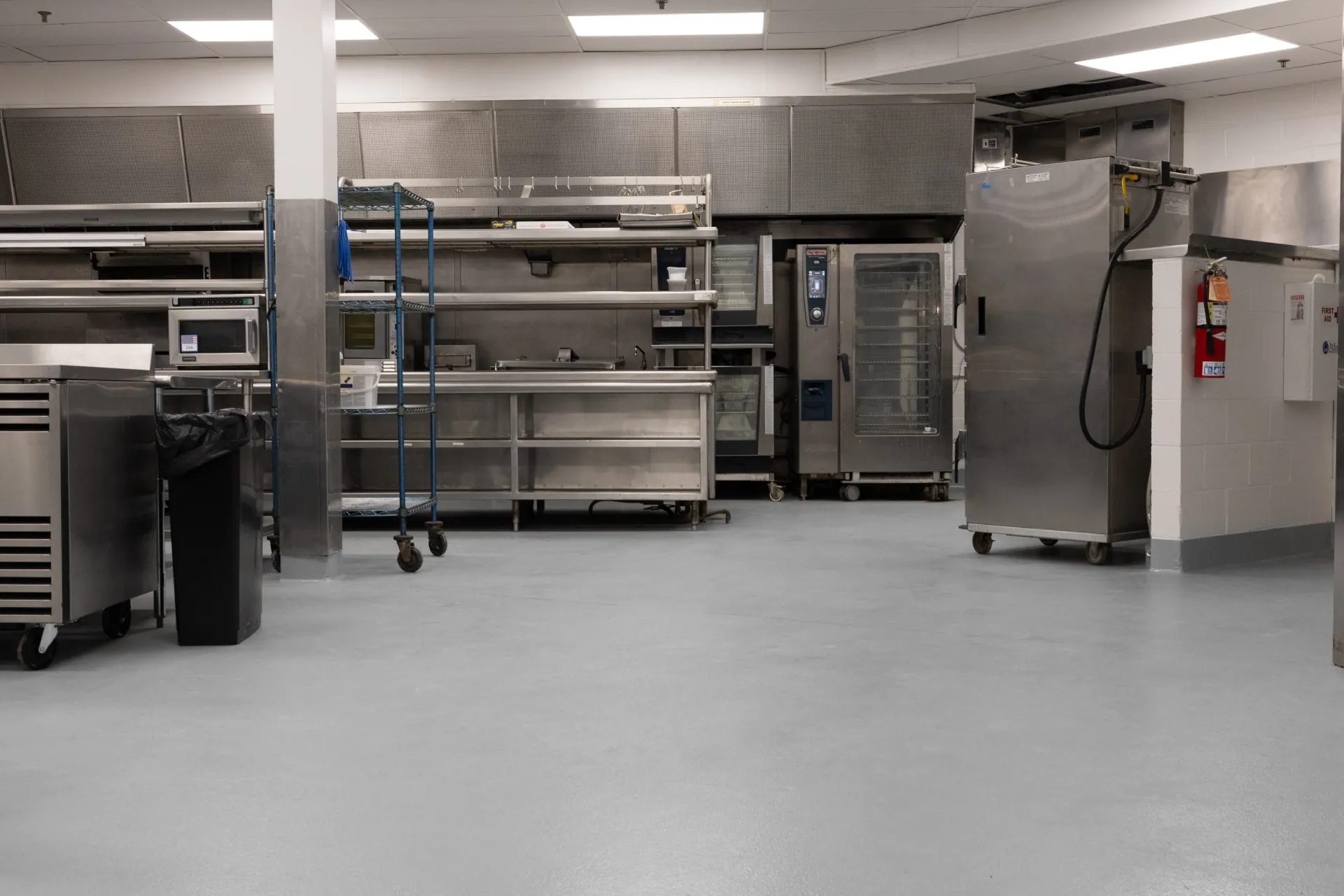
Urethane cement flooring is widely used in food and beverage facilities because it creates a seamless, sanitary surface that resists moisture, thermal shock, and frequent washdowns.
Every industrial facility has unique operating conditions, but for demanding environments, urethane cement flooring is often the preferred solution. Engineered for heavy-duty industrial use, urethane cement systems outperform many traditional coatings in facilities exposed to constant traffic, impact, moisture, and aggressive cleaning procedures.
When selecting an industrial flooring system, consider factors such as:
Unlike standard coating systems, urethane cement flooring is specifically designed to withstand the harsh conditions found in manufacturing plants, food processing facilities, commercial kitchens, breweries, and other industrial environments. It creates a seamless, durable surface that resists impact, abrasion, chemicals, and thermal cycling while supporting long-term performance.
The success of any industrial concrete floor coating depends heavily on preparation. Simply applying a coating over existing concrete is not enough.
Professional preparation typically includes:
Proper preparation creates the foundation for long-term coating performance.
Industrial operations often cannot afford lengthy shutdowns. Modern coating technologies allow many projects to be completed efficiently while minimizing interruptions.
Careful project planning and fast-curing systems help facilities return to normal operations as quickly as possible.
Industrial floors work hard every day, and they require protection that matches those demands. Investing in a urethane cement flooring system helps industrial facilities improve durability, safety, cleanliness, and long-term performance, even in the most demanding environments.
The right coating system doesn't just improve the appearance of a facility. It helps create a safer, more productive environment built to withstand years of heavy use.
If your current floor is cracking, staining, or slowing down operations, it’s worth a conversation before the damage gets more expensive to fix.
Contact Superior Floor Coatings today for a free consultation and find out which system is right for your facility.